
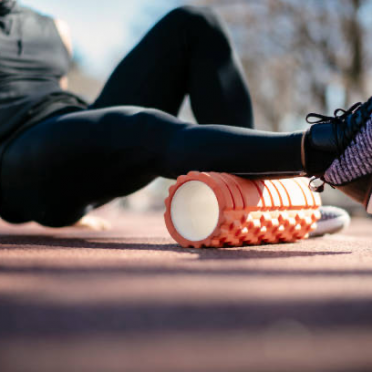
Foam rolling is a form of self-myofascial release — a technique that uses pressure to relieve tight muscles and soreness, as well as increase mobility. By applying gentle pressure with a foam roller, you help break up “knots” or adhesions in your muscles and fascia (the connective tissue around your muscles).
The Benefits of Foam Rolling
Foam rolling isn’t just about feeling good (though it does). Research and experience show that it can offer a wide range of benefits:
- Relieves Muscle Tightness: Loosens up areas that feel stiff or overworked.
- Improves Mobility: Helps your joints move more freely, improving range of motion.
- Boosts Recovery: Increases blood flow to muscles, speeding up healing and reducing soreness.
- Enhances Performance: When your muscles move better, you perform better!
- Reduces Stress: Like massage, it can calm the nervous system and promote relaxation.
Tips and Tricks to Foam Rolling
- Foam roll an area for 30 seconds to 2 minutes
- Only foam roll the muscle; avoid using a foam roller over bony areas or joints.
- Mild discomfort and soreness are normal; however, it should not be painful. If painful, move to another area or ease up on the amount of pressure being applied.
- When you find a tight spot, you can work the area by rolling up and down OR place and hold the foam roller, gently applying pressure to one specific spot.
- Make sure to breathe!
When Should I Foam Roll?
Foam rolling can be done before a workout, focusing on quick, gentle rolls to warm up muscles. It is often done after a workout as well to address tight areas and aid in recovery. This is when you’ll want to take your time, spending 1-2 minutes on certain areas. Foam rolling can also be a part of your everyday routine to relieve stiffness.
But how often should I foam roll? You can foam roll daily — even multiple times a day if needed.
So grab your roller, find a comfy space, and let’s roll!
 reddeer